Do Smart Cleaning Gadgets Deliver Better Carpet Results?
Smart Cleaning Gadgets For Carpets: Do They Deliver Results?
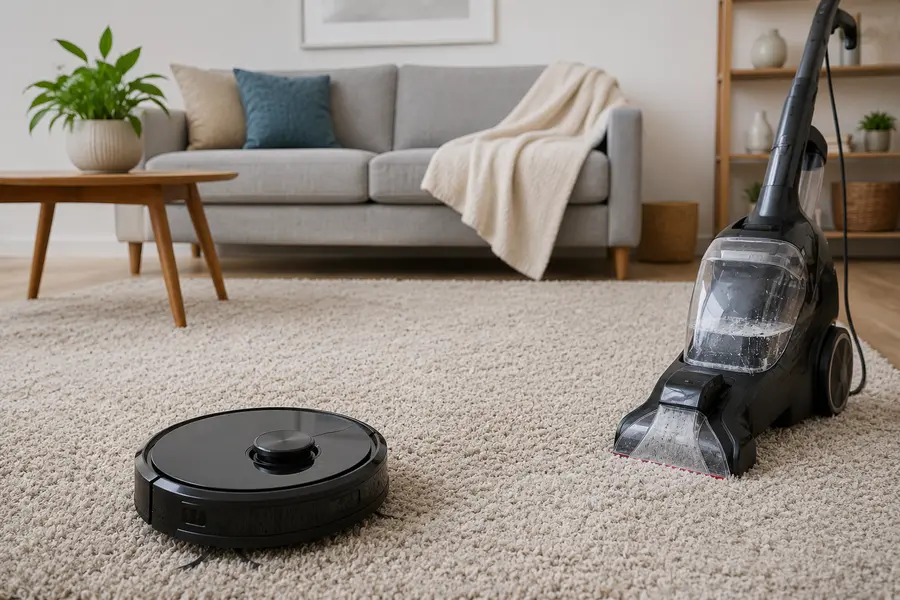
Keeping carpets clean has always required time and effort, as well as the right cleaning method. In many Australian homes, carpets are badly soiled by daily use and the dust from outside, dirt from pets, and children. With technology playing an increasingly prominent role in home maintenance, countless homeowners are wondering if these advances will make them more effective carpet cleaners. Robotic cleaners, sensor-based vacuums, robotic spot cleaners, and app-controlled systems are some of the smart cleaning devices that are gradually turning into household routine staples. They are claimed to provide convenience, effectiveness, and better cleaning with less manual work. What’s more, the demand for robotic home appliances is increasing not only in regard to floors, as kitchen cleaning robots have also arrived, vowing to help in making daily chores lighter.
Are these machines really cleaning our rugs or just making it easier to keep them clean? This article will explain smart cleaning for rugs, what works well with smart cleaning, and when you should use traditional ways of cleaning your rugs.
How Smart Cleaning Works
Latest cleaning technology combines sensors, algorithms, navigation mapping, and suction technology with scheduling to clean floors and other surfaces in the home without the user having to provide much input. In contrast to traditional vacuum cleaners, which have to be manually operated all the time, smart products can recognize obstacles, create a cleaning plan, and choose the best routes inside one or several rooms or floors. A few of these devices are capable of locating the dirtiest spots on the floor and increasing suction power automatically.
For carpet fibers, these systems try to achieve a uniform coverage and mobility by modifying the cleaning steps pace based on the surface friction. This leads to a steadier rinsing schedule for those households who prefer clean floors every day rather than undergo heavy daily clean-up once in a while. Many Australian homeowners like the convenience, as it means you can prevent the build-up of dirty windows.
Carpet Cleaning Performance Explained
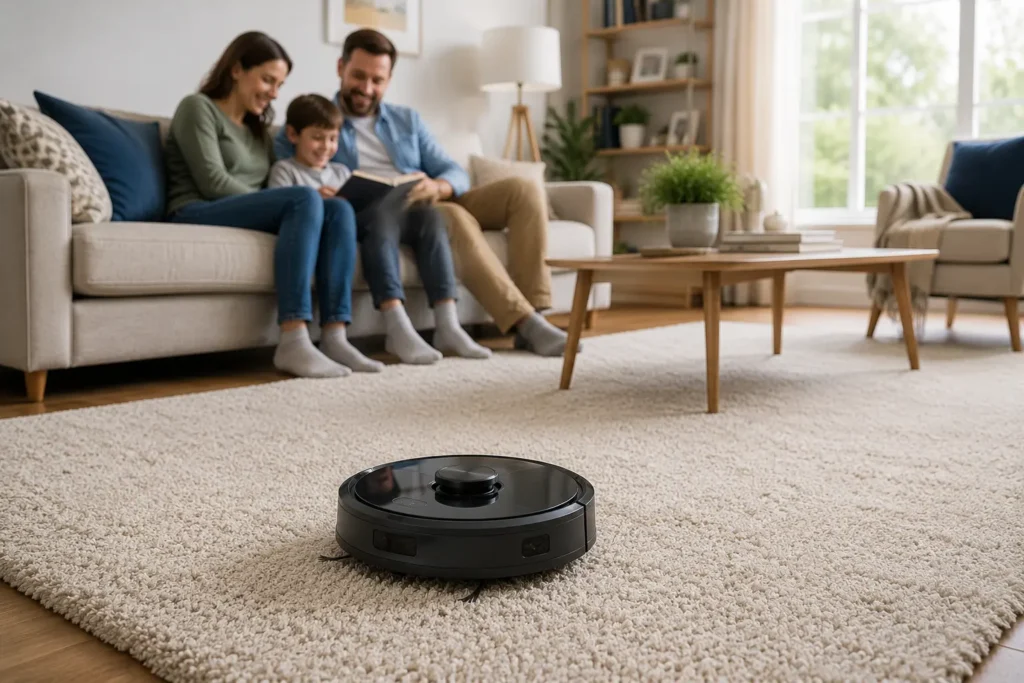
There’s more to carpet cleaning results than just removing surface dust. Good carpet care is a matter of extracting the dirt that has been trapped inside the fibres, containing allergens, and maintaining the appearance for as long as possible. That’s the kind of result you get from smart cleaning gadgets. For light maintenance and daily cleaning, smart devices perform well. They pick up surface litter, dust, pet fur and crumb-like particles that build up over the week.
Automated cleaning on a regular basis may also minimize the accumulation of dirt on the carpet and keep the carpet looking better for longer. But dust naturally accumulates more in carpets. Dense, embedded dirt and old staining may need stronger suction or professional extraction techniques. So smart devices tend to enhance routine maintenance that falls short of a full professional carpet clean rather than fully replacing the latter.
Daily Cleaning Versus Deep Cleaning
One of the biggest misconceptions about cleaning technology is to think automation will entirely replace the traditional methods. There are two separate definitions of cleaning: everyday cleaning and thorough cleaning. Cleaning regularly will remove dirt from the surface of your carpet and stop the matting. However, deep cleaning will remove dirt and allergens that are embedded in the fibres of your carpet. For carpets that require extra attention, professional deep fabric care can help restore cleanliness beyond what routine surface cleaning can achieve. Additionally, deep cleaning will also remove stains and moisture build-up.
Carpet Cleaning Comparison
| Cleaning Type | Main Purpose | Typical Frequency |
| Smart maintenance cleaning | Remove daily dust and debris | Several times weekly |
| Traditional vacuum cleaning | General cleaning and reach | Weekly |
| Deep carpet cleaning | Remove embedded dirt and stains | Every few months |
In general, it is better to use a combination of cleaning procedures to achieve the best results when cleaning carpets as opposed to using one method. However, residences that have a high volume of pet activity or children and are very heavily trafficked experience the most significant improvements when utilizing a combination of automated tools paired with a regular schedule of deep cleanings.
Features That Improve Results
But not all smart cleaning systems are created equal. A few features stand out on carpets. Sophisticated navigation eliminates skipped areas and random pattern motion. Automatic suction adaptation makes it possible for devices to adjust to the thickness of a carpet. Multi-surface recognition facilitates the change from timber to tile to carpet. Some of them even have scheduling features that make you want to clean your carpets more regularly. And the more you clean, the less your carpets wear out.
Owners who are into kitchen cleaning machines have discovered that the same goes for floor cleaning: automation reduces the amount of repetitive housework. However, it is more practical to choose features according to the actual needs of the household rather than looking for the product with the longest list of specifications.
Hidden Limitations To Consider
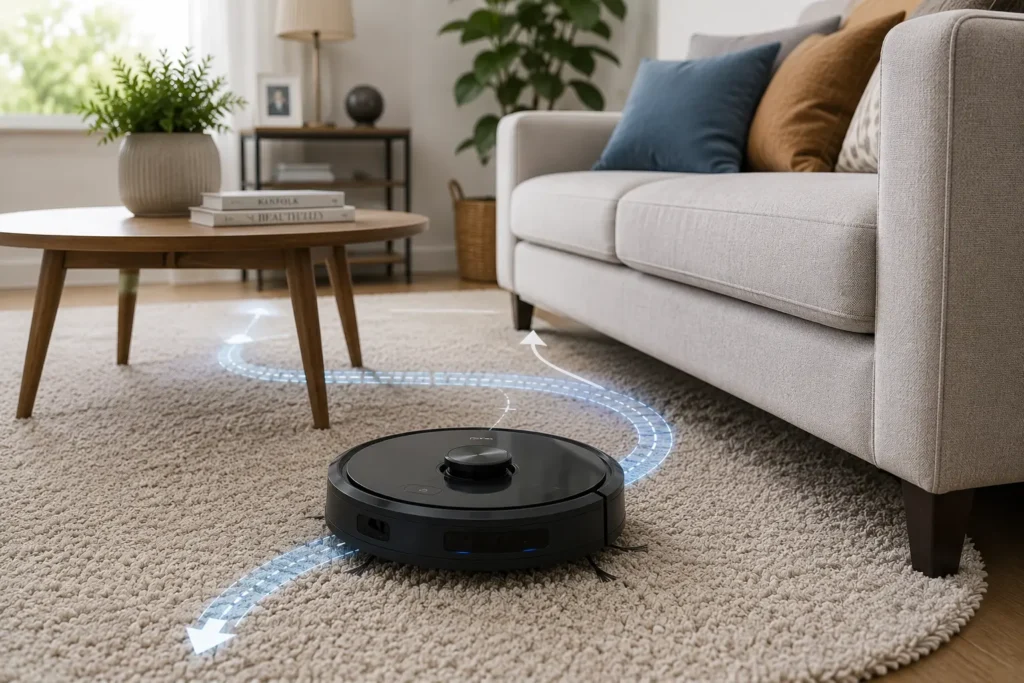
While the technology now includes convenience, limits remain to be taken into consideration before you expect the perfect results on your carpet. Smart gadgets can have difficulty with thick carpets, uneven transitions, rooms full of furniture, and piles of debris. Soft long fibers can impede movement and cleaning uniformity. Battery life may also affect results for larger homes in Australia. Cleaning cycles may be prematurely halted for certain tile sections, resulting in over- or under-cleaning of areas of the carpet. Maintenance is yet another limitation. Washing brushes, replacing filters, and ensuring that dust doesn’t accumulate on sensors are the three main maintenance tasks. If maintenance is naturally part of the daily routine instead of being deferred, it is going to be much easier.
Comparing Traditional And Smart Methods
Conventional vacuuming still offers superior control, reach, and suction power. Smart cleaning products put a greater emphasis on convenience and repeating cleanings. There’s no clear winner between the two, though.
Smart Cleaning Versus Traditional Cleaning
| Factor | Smart Cleaning Gadgets | Traditional Cleaning |
| Daily convenience | High | Moderate |
| Deep carpet performance | Moderate | High |
| Manual effort | Low | Higher |
| Edge cleaning | Moderate | Strong |
| Maintenance required | Moderate | Moderate |
For most homes, a mix of the two will yield the best cleaning results. Daily dusting and automated cleaning serve for daily cleaning, while traditional cleaning serves for deep cleaning.
Choosing The Right Device
Convenience and efficiency are important aspects of cleaning, but they cannot be achieved without the right tool. The right tool consists of a couple of factors; for example, pets in the house: one may need to operate the machine at a higher level of suction and dust capacity. Mixed flooring families should look for a multi-surface setting. In smaller homes, simpler models are adequate. For selection, wise homeowners will be asking themselves sensible questions, instead of keeping an eye on what technology is available.
How often do you need to vacuum, how many chairs and tables are in each room, and is speed or deep cleaning important? People taking kitchen cleaning appliances for granted are not likely to have a lengthy or hard time getting used to autonomous floor cleaning devices because they are also acceptable ways of managing a household. We shouldn’t aim to replace all cleaning—just reduce effort and achieve consistently cleaner spaces.
Final Thoughts
So do smart cleaning devices actually produce better results on carpets? It depends on what you mean by “better”. For less daily effort and cleaner carpets, smart cleaning tools can be incredibly effective. They ensure the uniformity of the surface, limit the amount of airborne particles, and make sustaining a standard cleaning quite a bit easier, mostly. Of course, when it comes to deep cleaning or stain removal, there is no escaping traditional methods, and the occasional hot water extraction will continue to be really important. For Australian homes, the best course of action is usually to combine well-thought-out cleaning schedules with technology. Use of smart cleaning devices, if properly done, not only lifts the look of the carpet and lessens everyday cleaning efforts but also results in cleaner living areas. Homeowners interested in long-term carpet care can also benefit from understanding how professional wool rug cleaning protects delicate fibres and preserves their appearance. Yet, they cannot entirely substitute the necessity of deeper cleaning at times.
Related Posts
How Often Should Windows Be Cleaned for Shine
Have you ever put your hand to your window and asked the question, What was…
Go-To Guide for Natural Cleaning with Castile Soap
Go-To Guide for Natural Cleaning with Castile Soap Have you ever imagined whether the same…

5 Vital Guidelines for a Spotless Home with Smart Cleaning
5 Vital Guidelines for a Spotless Home with Smart Cleaning Have you noticed sometimes you…